
Can You Copyright AI Images?
Version 1.0
You just made a hoax image with AI. Here's an uncomfortable question: which parts of it do you legally own? The U.S. Copyright Office answered this in its 2025 report Copyright and Artificial Intelligence, Part 2: Copyrightability — using real works that real artists submitted for registration. This isn't hypothetical: it decides whether you could stop someone from selling t-shirts of your work.
ℹ️ This is education, not legal advice. Registration decisions are case-by-case; when it matters, ask a lawyer.
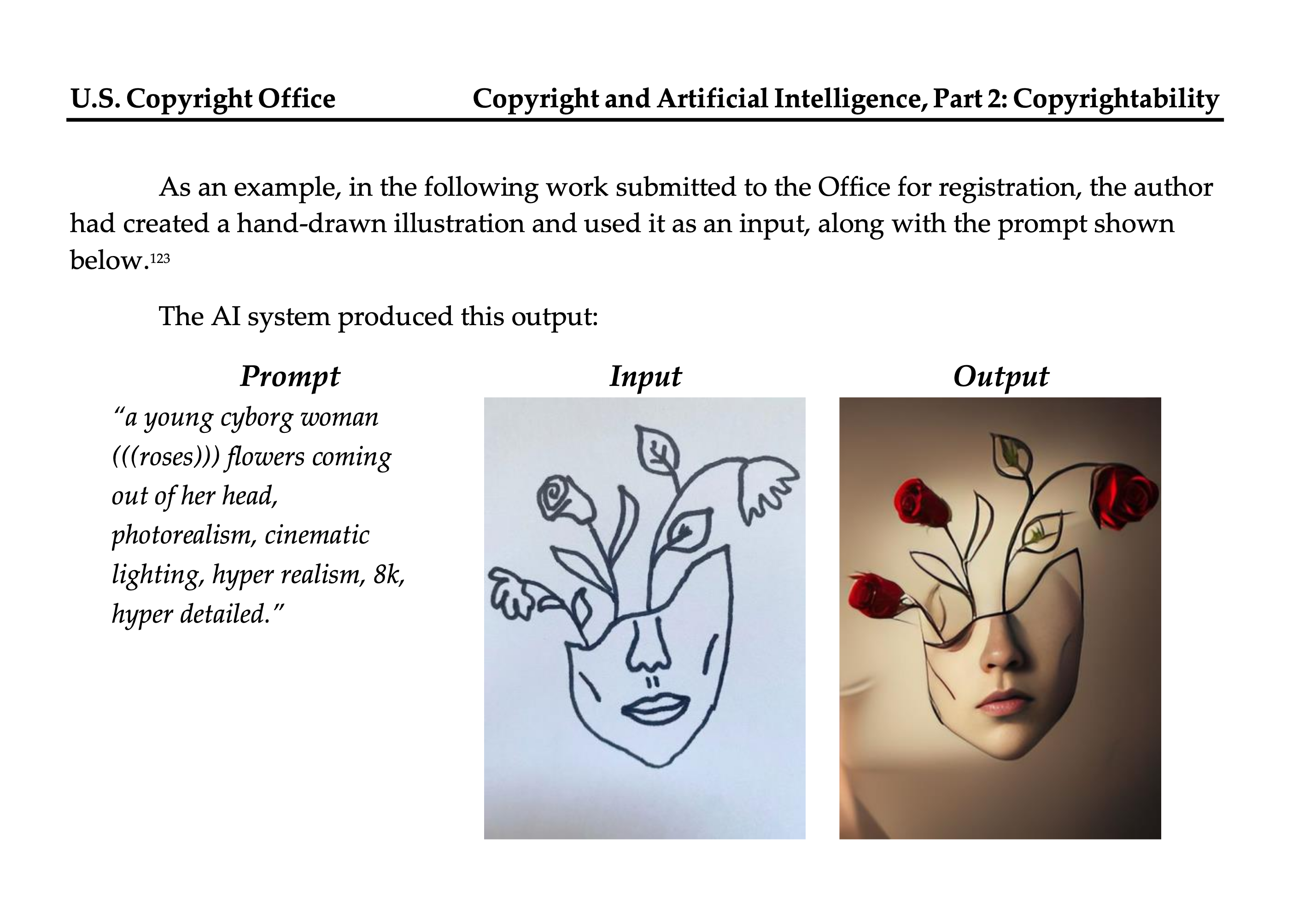
A real artist hand-drew a sketch, fed it to an AI with the prompt shown, and submitted the output for registration. Study the case below, then write down your ruling before revealing the real one:
In teams, answer two separate questions for each scenario: (1) Could the maker copyright the result? (2) Could the result infringe someone else's rights? They're independent — a work can be uncopyrightable and infringing. Commit to answers, then open the hint.
Copyrightable: no — prompt-only. Infringing: very likely — Mario is a protected character (and Nintendo is famously litigious). Uncopyrightable and infringing at once.
Copyrightable: partly — like the rose case, whatever of your drawing remains clearly perceptible stays yours; the AI's watercolor rendering is disclaimed. Infringing: no — it was your drawing all along.
Copyrightable: your watercolor's perceptible elements, yes; the AI styling, no. Infringing: style alone isn't protected, so usually no — but selling it under that artist's name invites other legal trouble, and an ethics question copyright can't settle.
Copyrightable: your edits, arrangement, and photo — yes; the surviving AI parts — no. This is the “you own your changes” rule working in your favor. Infringing: no, absent copied source material.
Copyrightable: no — the Office says effort and iteration don't turn prompts into authorship, and picking a favorite isn't enough. Infringing: usually no, unless the output visibly copies a protected work. (Harsh? Many artists agree — that's the debate.)
Copyrightable: murky — your inking choices may add protectable expression, but a faithful trace of unowned AI output adds little that's “yours.” Infringing: nobody owns the AI original… which is why this one breaks intuitions. Argue it out.
📥 Post your team's most contested scenario and verdict to the class channel; add 🤯 to the scenario that most changed your mind.