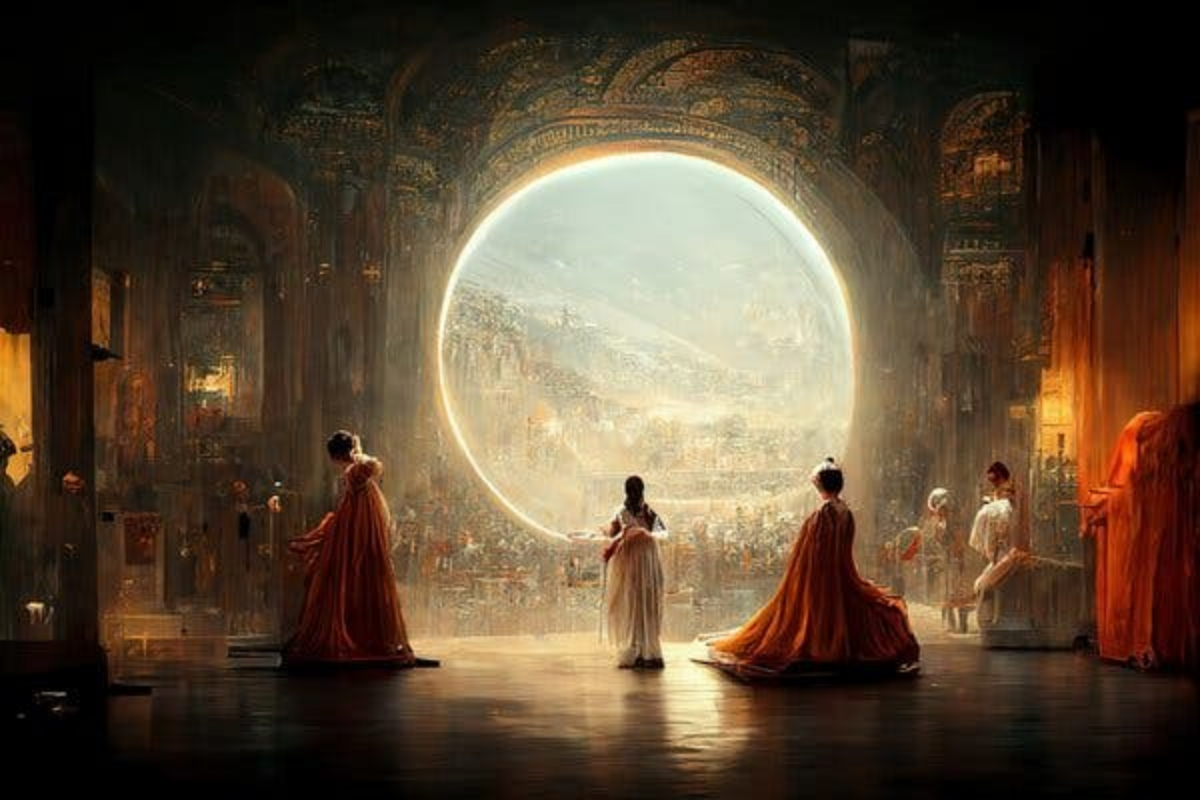
In 2022, Jason Allen won first place at the Colorado State Fair with an image he made in Midjourney. When someone else copied it, the copier argued that because Allen didn't own a copyright, "no theft has occurred." The US Copyright Office agreed Allen didn't own one.
This reading covers the latest court cases that apply to AI and creators. (This page covers US law only).
Can you copyright AI-generated works?
The law in one sentence:
You can copy your fingerprints, not your prompts. You can own the parts of a work that you worked on yourself, not the parts that a machine produced from your instructions belong.
Notice that courts don't care about how much effort you put in. You can work for weeks on prompts and still own nothing, as the second case below shows.
The "ladder" of AI ownership
Each rung has more of a human's hands in the final work.
Rung
Case
What the human did
Can it be copyrighted?
0 🤖 No human
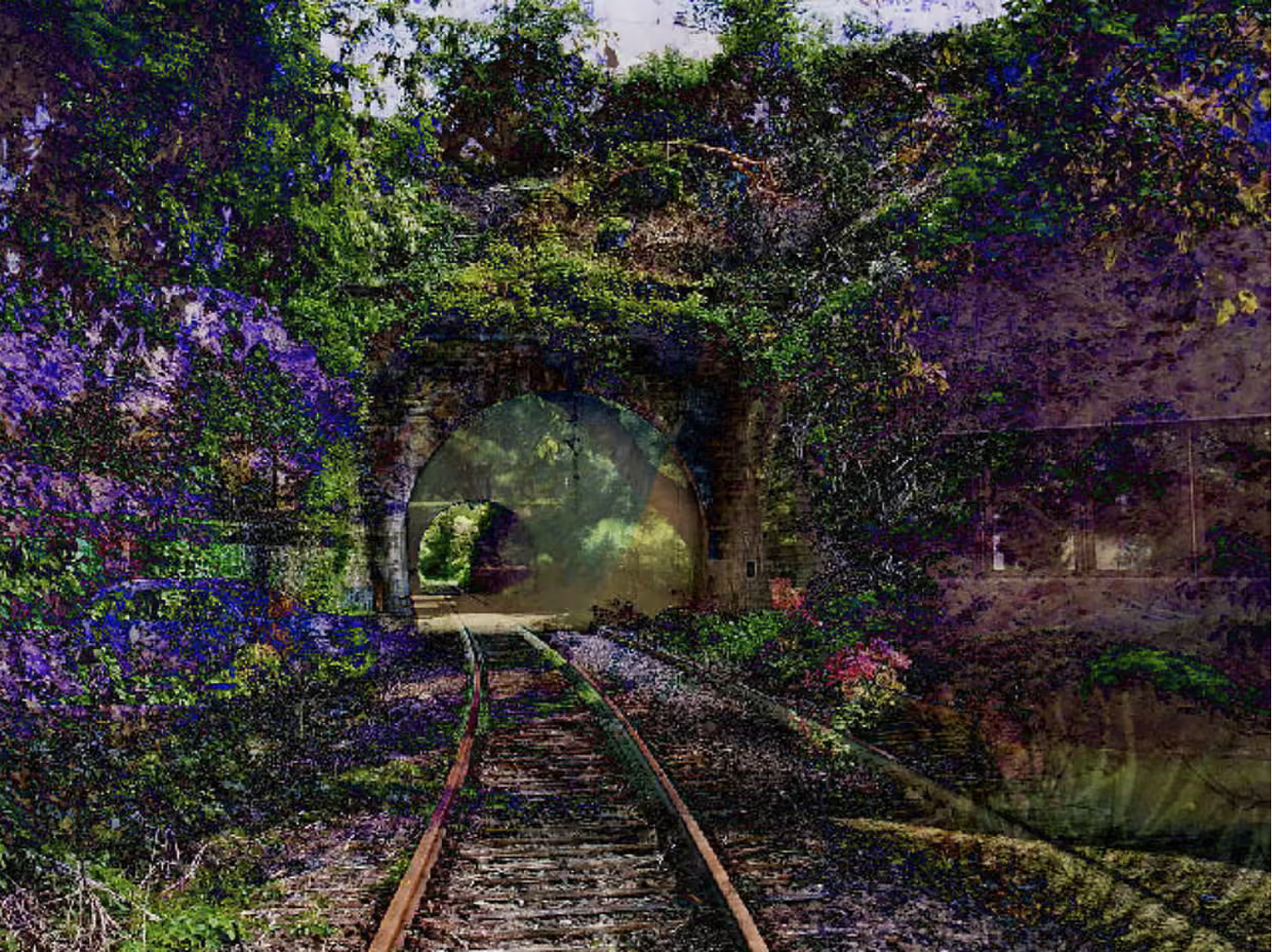
A Recent Entrance to Paradise
Nothing: the AI made it alone
No
1 💬 Prompts only
Théâtre D'opéra Spatial
Hundreds of prompts, plus touch-ups
No (still in court)
2 🧩 Words + layout
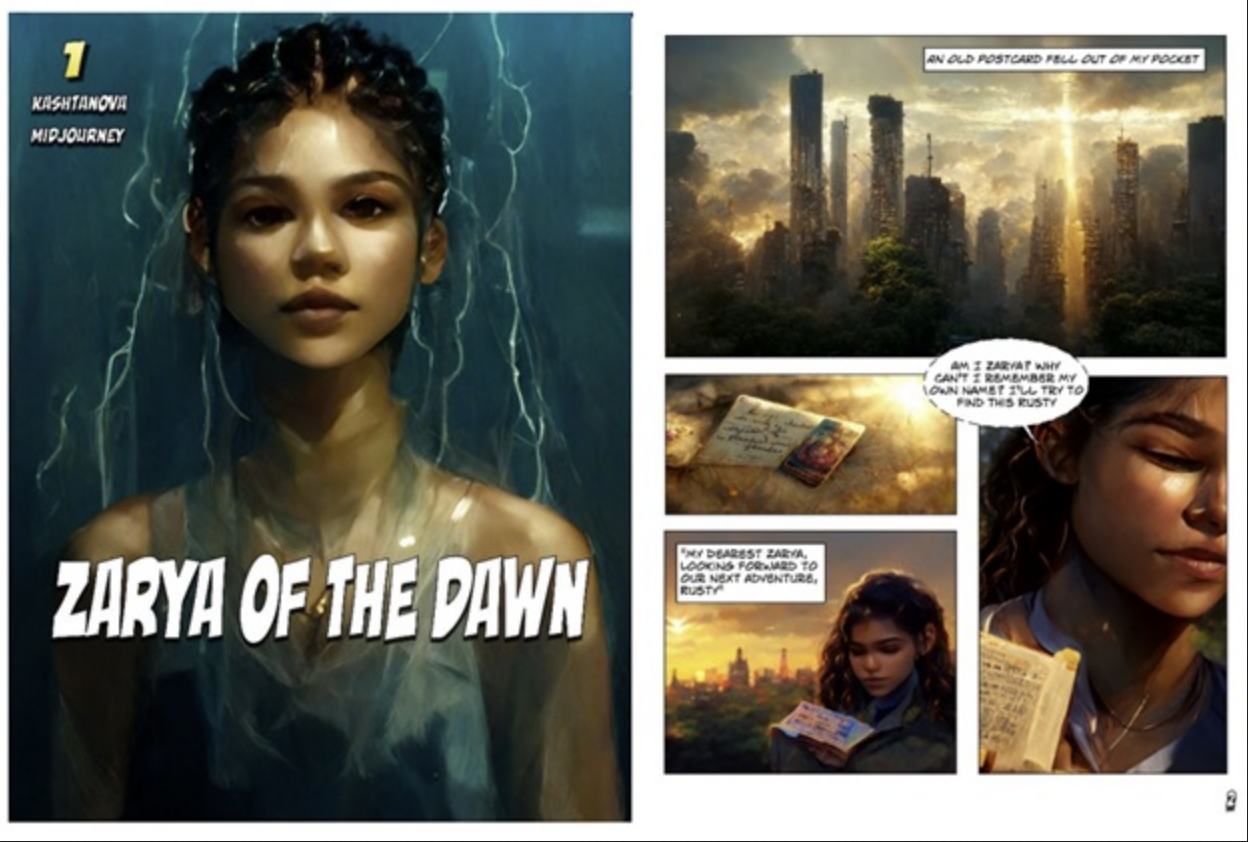
Zarya of the Dawn
Wrote the story, arranged the pages
Partly (words and layout only)
3 ✂️ Hands-on editing
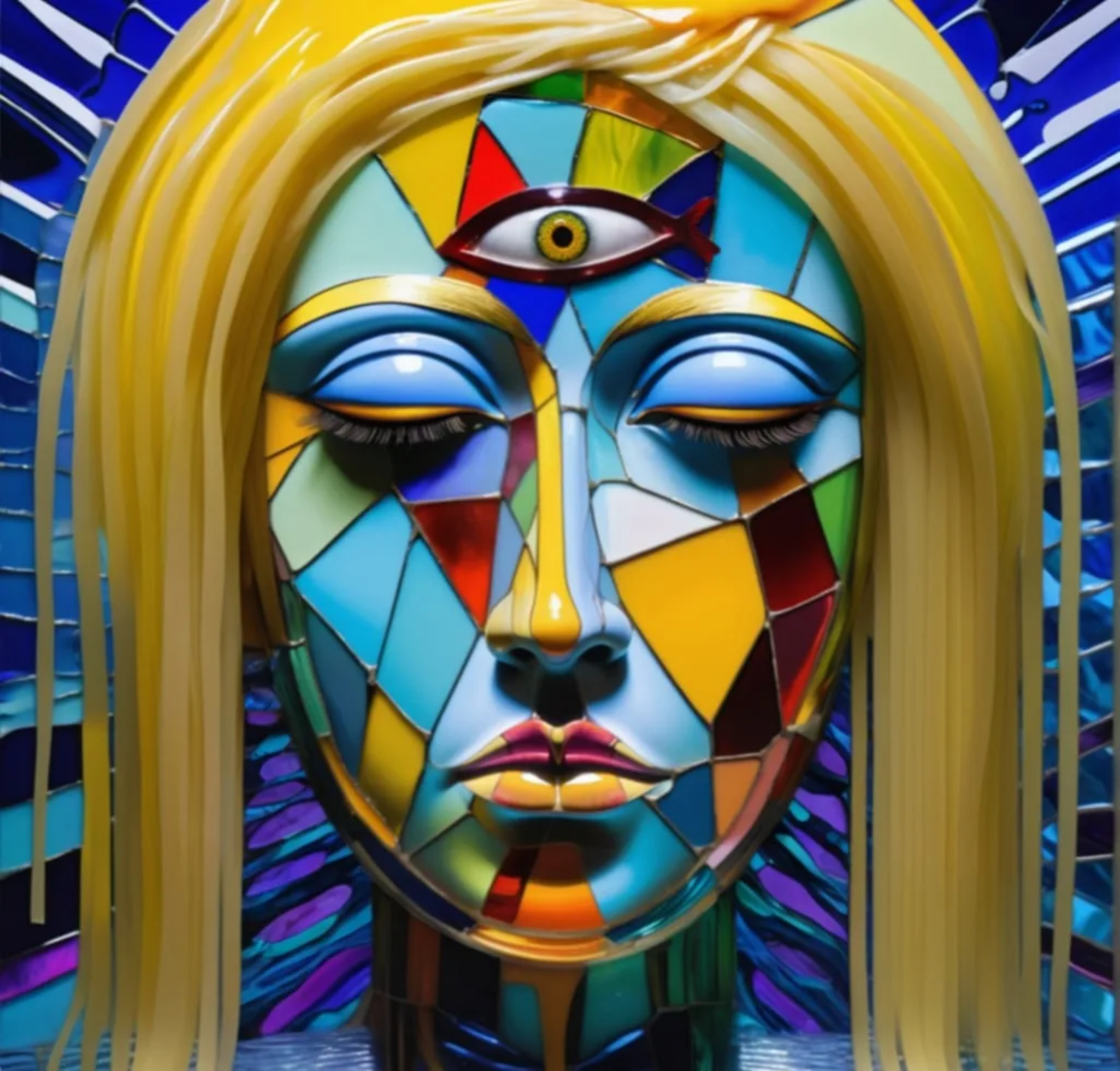
A Single Piece of American Cheese
Repainted regions round after round, and recorded it
Yes (the arrangement)
🪜0 A machine has no rights to its images
Computer scientist Stephen Thaler built an AI system that produced an image, A Recent Entrance to Paradise, with no human direction. He tried to register the AI itself as the author. Courts said no: US copyright requires a human author. In March 2026 the Supreme Court declined to hear his appeal, so that's that.
The result: a work with zero human authorship is automatically public domain.
🪜1 Prompt output doesn't merit copyright
Jason Allen says he ran at least 624 prompts through Midjourney, then upscaled the result and fixed it in Photoshop, to make Théâtre D'opéra Spatial ("Space Opera Theater"). It took first place in the fair's emerging digital artists category, and plenty of artists online were furious. Starting in 2023, the fair began requiring entrants to disclose AI use.
The Copyright Office offered Allen a deal: register the parts he made himself and exclude the AI-generated parts. Allen declined and demanded copyright for the whole image, so the Office refused registration entirely. He sued in federal court in Colorado and the case is still unsettled.
🪜2 You did part of the work, you get part of the copyright
Kris Kashtanova wrote Zarya of the Dawn, a short graphic novel illustrated with Midjourney images generated from prompts about the actress Zendaya. The Copyright Office registered it in 2022, and headlines announced that an AI comic had won a copyright.
Then the Office took a second look. In 2023 it canceled that registration and issued a narrower one. Kashtanova's words and the selection and arrangement of the pages stayed protected; the Midjourney pictures themselves could not be copyrighted.
🪜3 Hands-on refinement of AI output deserves copyright
Kent Keirsey, CEO of the AI company Invoke, started with a one-prompt image ("spaghetti noodle hair" was part of it). Then he used inpainting, a tool that lets you select one region of an image and regenerate only that part. Over about 35 rounds he reworked the face, the background, and the details until he had A Single Piece of American Cheese: a woman with noodle hair, a third eye, and melting cheese.
The Copyright Office refused it once. On the second try, in January 2025, it said yes, protecting the selection, coordination, and arrangement of the pieces, but not any single AI-made piece. Two details worth remembering:
Invoke's software had recorded every step, so Keirsey could prove his choices.
The copyright went to the company, not to Keirsey, because he made it as part of his job.
Is a prompt like clicking a camera shutter?
The Copyright Office's 2025 report says prompts alone aren't authorship, comparing typing a prompt to hiring an artist and giving general directions and claiming the person (or machine) who executed the work did the creative part. (Art history begs to differ, but that's a different story.)
Those on Allen's side say a better analogy is to photography. In 1884, the Supreme Court ruled that a photograph of Oscar Wilde could be copyrighted, even though a machine did the recording, because the photographer chose the pose, the costume, and the light. If clicking a shutter counts, why not 624 prompts?
Courts haven't settled which comparison is correct—what do you think?
Can you use other people's AI-generated stuff?
Owning your work is one question. Using someone else's is another.
A style can't be copyrighted. Making something "in the style of Studio Ghibli" doesn't break US copyright law by itself (whether it's fair to Miyazaki is a different question; see this week's other readings).
A specific photo can be copyrighted. In Warhol v. Goldsmith (2023), the Supreme Court ruled against Andy Warhol's estate for licensing his silkscreen of the artist Prince to a magazine. The main reason was that this portrait was based on photographer Lynn Goldsmith's photo of Prince, which was also sold to a magazine. Restyling someone's picture doesn't make it yours if your version competes with theirs.
💸 Meanwhile, on the input side: the fights over training data continue. Authors whose books were pirated to train Anthropic's Claude split a $1.5 billion settlement, about $3,000 per book (that's why you can find your favorite authors in LibGen). Music publishers have since sued over tens of thousands of songs. (Those cases are about what AI companies owe creators, not what individual creators can or can't do.)
What this means for you
What you make by hand is yours (your drawing, your lettering, your code, your layout), even inside an AI-assisted project.
Keep receipts. The cheese image won because its process was recorded. Documentation like chat transcripts and comparisons of your human- and AI-generated works could also be evidence of your hand in the process.
If you ever register a work, name the AI parts. Allen refused, and it cost him the whole image.
Don't restyle someone else's photo to sell. Style is free; their picture isn't.
Test yourself!
Riley is making a poster for a friend's band. Click each scenario to see how it would likely play out.
No. That's rung 1 (the prize-winning Midjourney image) at best: a prompt, not a fingerprint. Another band could put the same image on their merch.
Partly. Riley's lettering and arrangement can be copyrighted; the AI background isn't. That part is rung 2 (the comic).
Risky. The anime style is free to use, but the friend's photo is the friend's. Selling prints of it is risky because of the Prince portrait precedent.
Disclaimer: This is a survey of the legal landscape, not legal advice. For a real decision, consult a lawyer.
AI use in building this exercise is Cyborg: You and AI worked together, going back and forth over numerous rounds to revise the work or letting AI hand off the work to you after no more than 50% was complete.
 In 2022, Jason Allen won first place at the Colorado State Fair with an image he made in Midjourney. When someone else copied it, the copier argued that because Allen didn't own a copyright, "no theft has occurred." The US Copyright Office agreed Allen didn't own one.
 AI use in building this exercise is